new baby
Gifts for a New Baby
What new parents actually need, why the mother is often the better recipient, and how to time a gift so it helps rather than piles up.
Straight to the gifts: Shop hampers Shop flowers New baby gifts
The standard baby gift misses twice
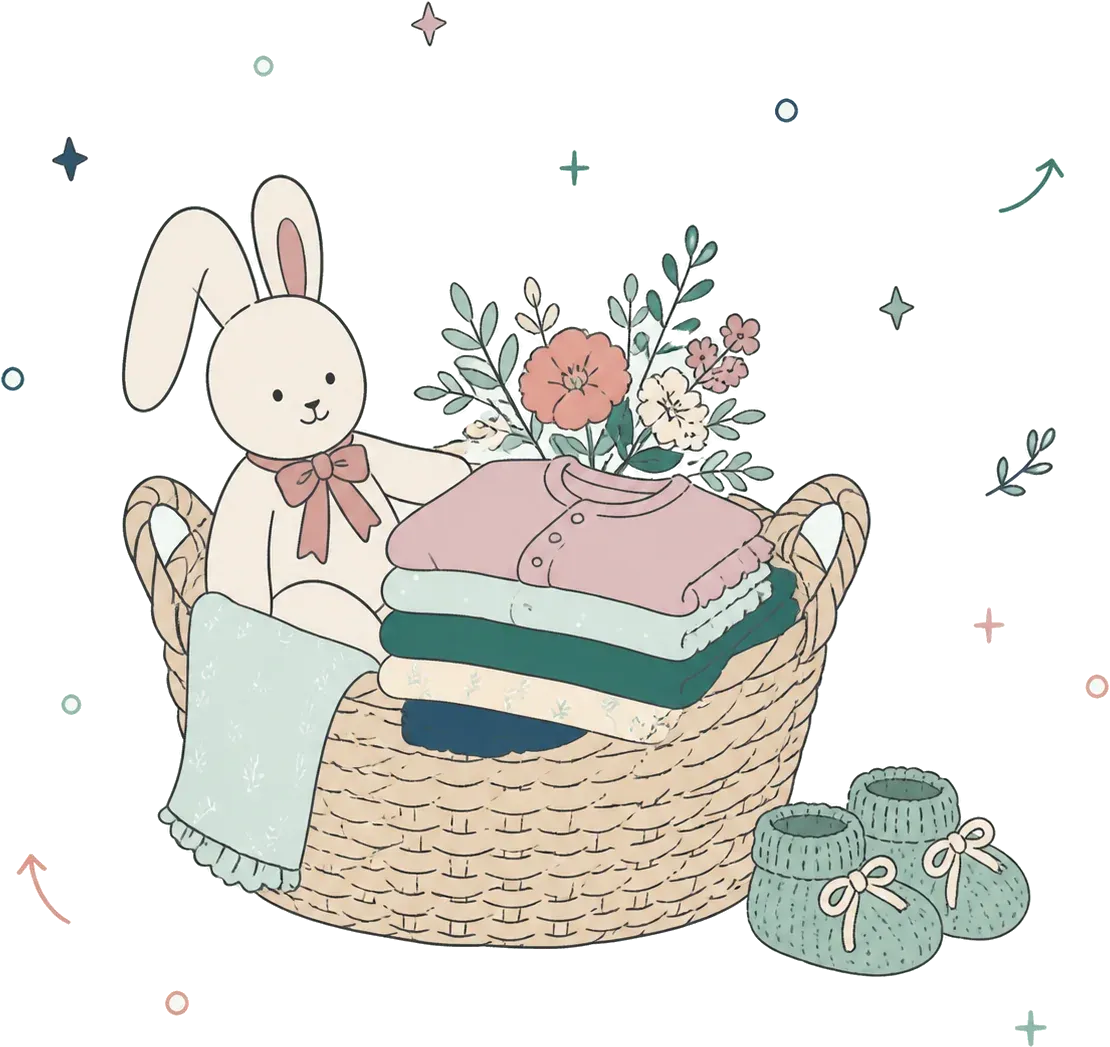
Most baby gifts are tiny clothes and soft toys, which means the average new household ends up with a pile of newborn outfits the child outgrows in weeks and a shelf of teddies the child cannot use for a year. The gift misses the baby, who needs almost nothing, and it misses the parents, who need almost everything. Aim at where the need actually is and yours becomes the gift they remember.
What they get five of, and what they run out of
They get five of: newborn-size clothes, soft toys, blankets, and anything else made for the first three months. They run out of: sleep, time, food they did not cook themselves, and clothes in the sizes nobody thought to buy. The simplest fix costs nothing extra: buy the same kind of thing everyone else buys, but sized for a child of six to twelve months. It arrives exactly when the newborn pile has run out.
Better still, leave the clothing aisle altogether:
- Food. A cooked meal, frozen portions, or a meal the parents choose themselves.
- Nappies in bigger sizes. Never glamorous, always used.
- A practical voucher, so they can fill whatever gap turns out to exist.
- Help, promised specifically and honoured: an errand run, a school lift for the older child, two hours of holding the baby while the parents sleep or shower.
Gift the mother, not the baby
The baby owns everything already and notices none of it. The person who has just done something enormous, and who visitors now walk past on the way to the cot, is the mother. A gift aimed at her lands differently: comfortable things she would not buy herself right now, food she loves, something for later when she is ready, or simply the visit that opens with “I came to see you, not just the baby.” If the parents are a couple, feeding both of them counts double.
Timing: miss the first week on purpose
The first week is chaos: visitors, admin, broken sleep, and a house filling up with things nobody has unpacked. A gift arriving into that week gets lost in it. Hold back. From about the third week the visitors thin out, the cooked meals stop coming, the exhaustion is still there, and a gift or a meal means far more. There is no deadline on this one. A baby gift at two or three months is not late. It arrives when the help has dried up, which is the best timing there is.
One practical note: send to the home, not the hospital. Stays are short and discharge times are unpredictable, so a hospital delivery is a coin toss.
Hygiene and the practical stuff
- Washable everything. If it cannot survive a hot wash, it will not survive a baby.
- No strong fragrances, whether on the gift or on you when you visit.
- Soft toys: check the age recommendation, and avoid small parts and long ribbons for a newborn.
- If you visit: do not come sick, ask before coming, keep it short, wash your hands before holding the baby, and bring something with you rather than expecting tea.
When you do not know the family well
The less you know the household, the more neutral the gift should be. Do not guess at anything that touches parenting choices or belief: feeding, dummies, religious items, clothing with slogans. Safe ground: practical basics in bigger sizes, muslin cloths, a voucher, or food, after one question about allergies and preferences.
And the strongest move of all is the direct question: “What do you actually need?” New parents will tell you precisely, the answer is often wonderfully boring, and meeting it beats surprising them every single time.
The second baby, and the older sibling
Second babies inherit everything and get fewer gifts, so a gesture for a second child is rarer and warmer than the tenth gift for a first. And where there is an older sibling, a small gift for them, handed over first, buys peace in a house where a two-year-old is watching the new arrival absorb all the attention. Parents notice that one more than almost anything else you could bring.